- Offline-first field systems
- AgriTech & traceability
MHC (Eco-Micaia) — honey traced from beekeeper to bottle
Every bucket of honey linked to its beekeeper at the moment of purchase and followed through filtering, pressing and colour grading to the bottled product.
- Period
- 2026
- Status
- In development
- Role
- Technical lead for the rollout and the honey plugin development, with the Empoderando Moçambique team
- Client
- Mozambique Honey Company (Eco-Micaia)
- Partners
- NIRAS (VaMoz Competir)
Problem
MHC buys raw honey from beekeepers in Manica province, processes it at its Chimoio factory and sells it bottled. With aggregate records, a quality problem in the final product could not be traced to a bucket — or a beekeeper.
Solution
Between 21 and 24 September 2026, in Chimoio, FAMS was reconfigured from scratch for MHC, reusing the barcode-based honey plugin. We brought the field and factory teams into module-based training, mapped the full flow in nine stages — from beekeeper to sale — and field-tested the link between bucket code and beekeeper. Process gaps found one day were fixed the same day and became the next day's field test.
Technical decisions
01
Linking the bucket to the beekeeper at purchase
The bucket code is tied to the producer at the moment of purchase and follows the bucket into the factory, so quality problems can be traced per bucket rather than only in the final product.
02
Weight confirmation instead of a waybill
Instead of issuing waybills, tracking now relies on confirming each bucket's weight. It simplifies field work and removes an annual licence.
03
Many-to-one batches in the factory
Several buckets feed one filter and a pressed batch has several sources. The raw → filtered → pressed/blended model keeps those sources, so colour-graded honey (light, medium, dark) and wax stay traceable back to the original buckets.
04
Hives as custom fields
The number of hives and their types (traditional, KTB and Langstroth) live in custom fields on the production field, without changing the database schema.
05
Payment and receipt for the beekeeper
Each purchase records payment status (pending → paid) and method (e-Mola, M-Pesa or cash in the field), and the beekeeper gets a printed receipt.
Images
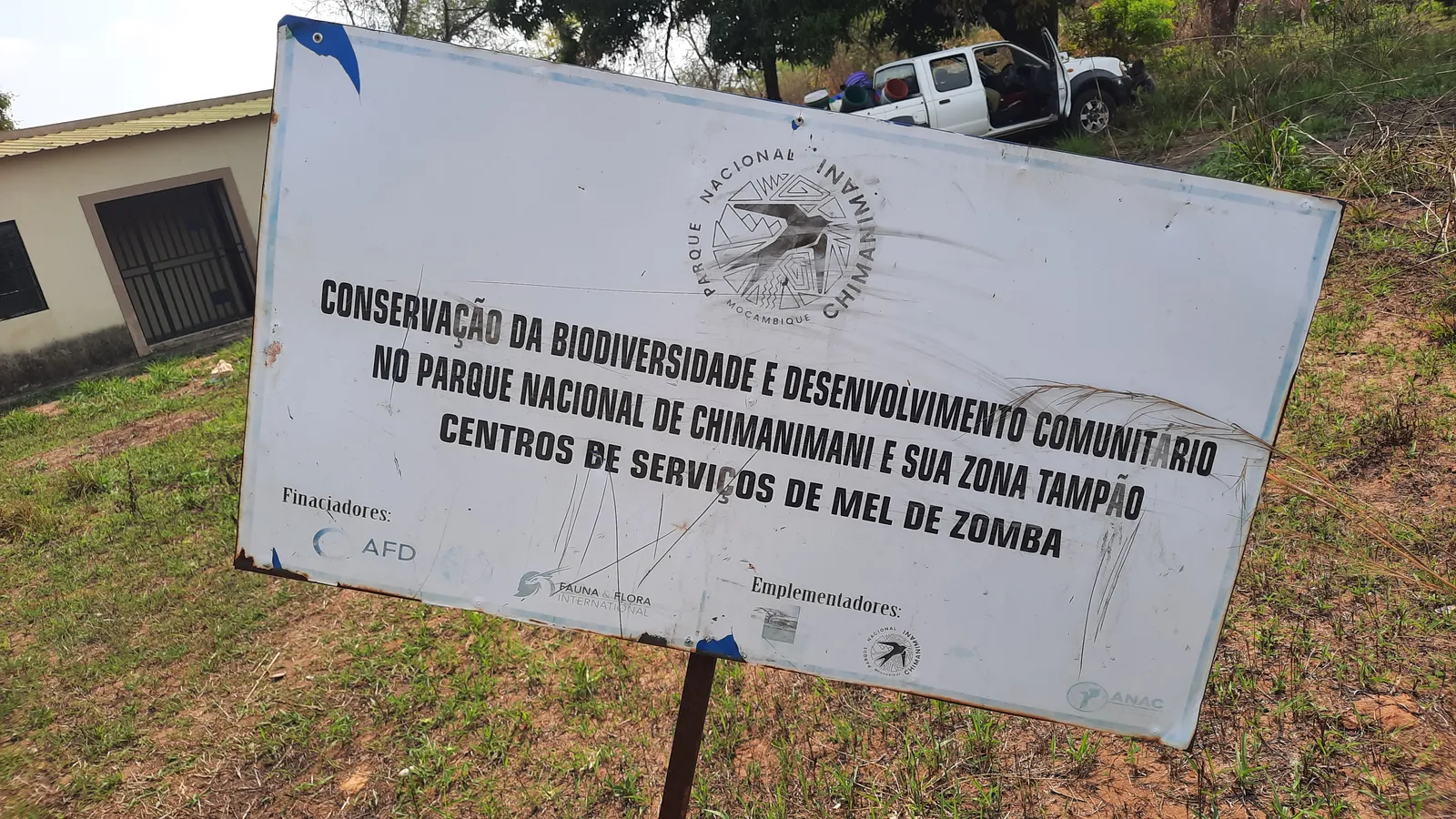
01 / 13 — Sign at the Zomba Honey Service Centre, in the Chimanimani National Park buffer zone, where MHC buys honey from beekeepers
Technologies
- Laravel
- PHP
- MySQL
- Ionic
- Angular
- Capacitor
Verifiable results
- stages mapped in FAMS, from beekeeper to sale
- 9
- reconfiguration, training and field test in Chimoio
- 21–24 Set 2026
What I learned
Designing the process with field and factory staff in the same room shortens everything: gaps surface during training, get fixed the same day, and the next day's field test already validates the fix.
SDGs
SDG 2 · Zero Hungerprimary
Every purchase is tied to its beekeeper, with confirmed weight and a printed receipt, so honey income arrives as accurate, identifiable payments.
SDG 12 · Responsible Consumption and Productionprimary
Traceability from bucket to bottle: moisture, sugar (Brix), colour and lot make it possible to cut losses and account for every processing stage, with signed production reports.
SDG 15 · Life on Landcomplementary
The Zomba honey service centre sits in the Chimanimani National Park buffer zone: auditable data supports a honey value chain compatible with conservation.